Starting a new website or marketing project can be surprisingly difficult, particularly when you know something needs to improve but aren’t entirely sure what the solution should look like.
Perhaps your website isn’t generating enough enquiries, your marketing budget isn’t delivering the results you expected or your business has simply outgrown its current online presence.
You might already have a solution in mind, whether that’s a new website, a Google Ads campaign or a broader marketing strategy. But before approaching an agency, there’s one thing worth getting right: the brief.
A useful brief doesn’t need to be a lengthy document filled with technical requirements. It needs to explain what your business is trying to achieve, why it matters and what an effective outcome would look like.
Start with the problem, not the solution
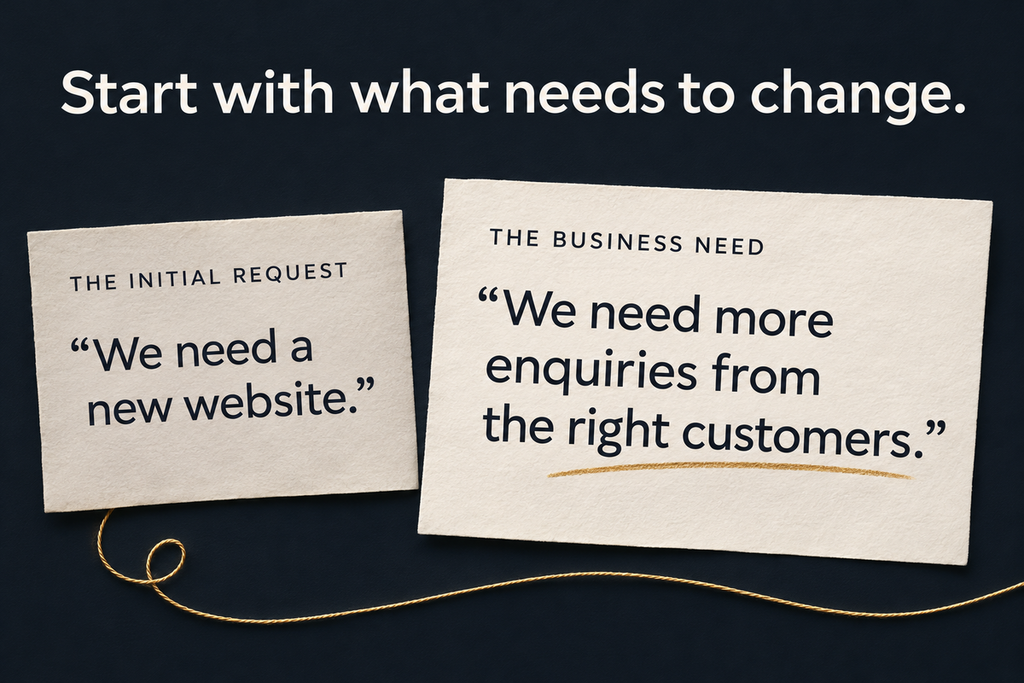
One of the most common mistakes when commissioning marketing work is starting with a list of deliverables rather than explaining the underlying business problem.
For example, asking an agency to build a new 20-page website gives them a fairly clear instruction, but it doesn’t explain why those pages are needed.
Is your existing website outdated? Are customers struggling to understand your services? Are you attracting the wrong enquiries? Or has your business expanded into markets that your current website doesn’t adequately represent?
Each of those situations might require a different approach, and rebuilding the website might not always be the most effective answer.
The more useful starting point is explaining what needs to change and allowing the agency to recommend how best to achieve it.
Give your potential partner something to work with
Beyond the problem itself, a good brief provides enough context to understand the business and its priorities.
Who are you trying to reach? What marketing activity is already in place? What has worked previously, and what hasn’t? Are there commercial targets, budget considerations or deadlines that will influence the project?
You don’t need to arrive with detailed audience personas, a fully developed strategy or precise technical specifications. In fact, working through those questions should often be part of what you’re paying a specialist to help with.
What matters is providing enough direction to make the initial conversation productive.
And if you don’t know the answer to something, say so. Identifying the questions that still need answering can be just as valuable as arriving with a complete plan.
A better brief makes for a better starting point
The purpose of a brief isn’t to tell an agency exactly how to do its job. It’s to establish a shared understanding of what you’re trying to achieve, what constraints exist and how you’ll recognise success.
That can save time, reduce misunderstandings and help you assess whether a proposed solution genuinely meets your business needs.
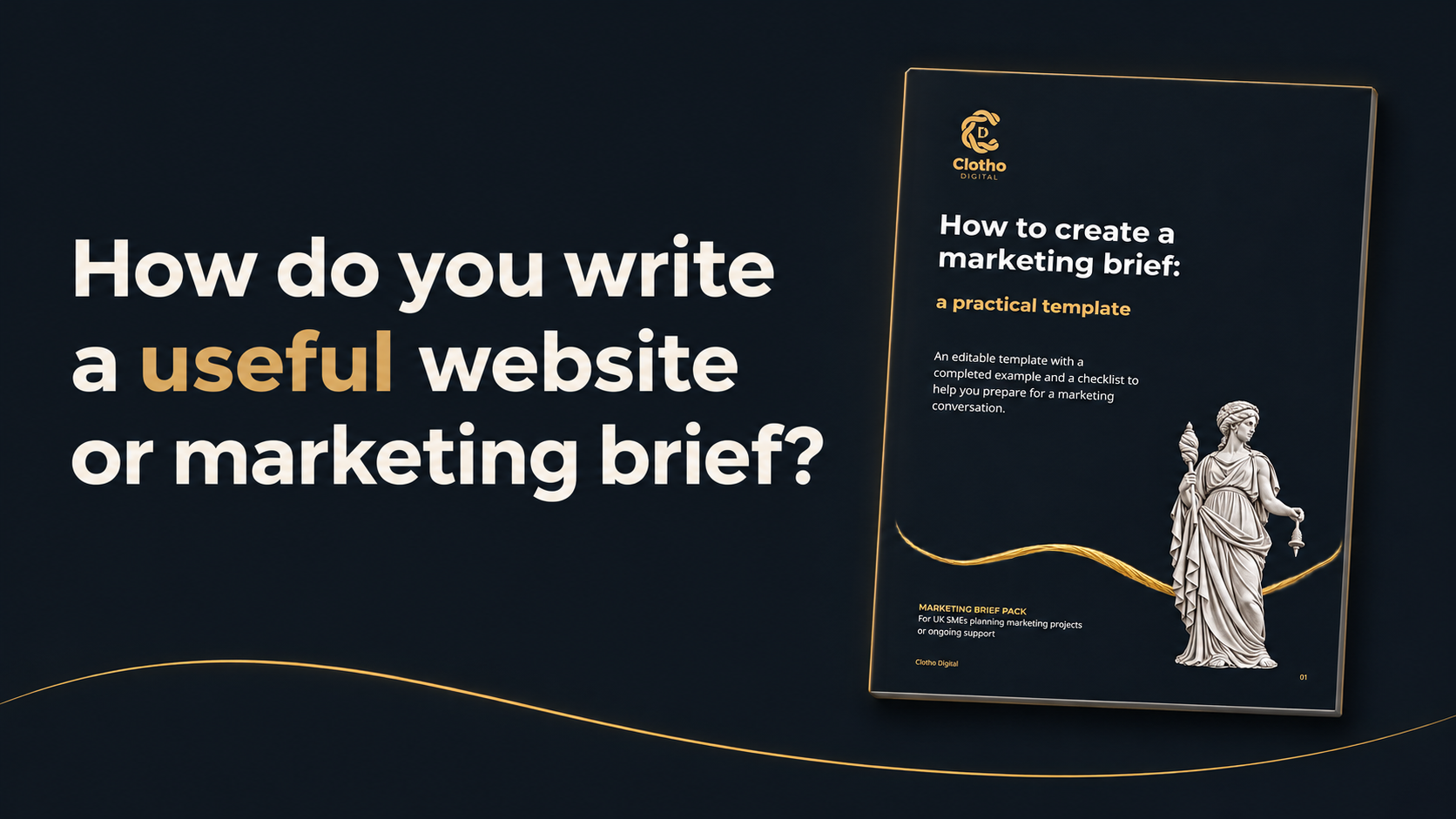
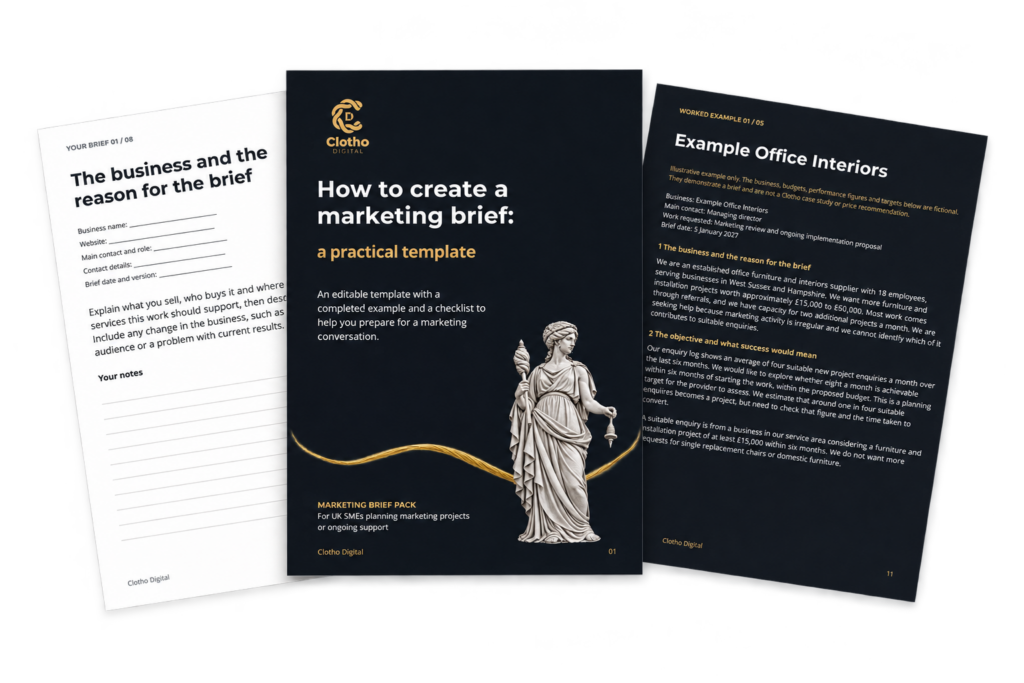
To make the process easier, we’ve created Planning a website or marketing project: a practical SME briefing template.
It brings together the key questions, planning considerations and project details worth thinking about before approaching a potential partner, giving you a structured starting point without turning preparation into a project of its own.
Whether you’re preparing to approach Clotho Digital or another agency, a little clarity at the beginning can make the conversations that follow considerably more valuable.