The short of it
An AI website builder can do a surprising amount of the work.
It can create pages, write copy, generate images, add forms and help get a business online much faster than traditional website building ever could.
But publishing the site doesn’t mean every important decision has been taken care of.
You are still responsible for whether the website is actually useful.
That includes deciding what people should find through Google, what counts as a valuable enquiry, whether your analytics are measuring the right things, whether visitors can use the site comfortably and what happens if you eventually want to move away from the platform you chose.
Some of those jobs are relatively simple.
Others become more important as the website becomes more commercially important.
SEO is a good example. An AI builder can create page titles, headings and service pages, but it doesn’t automatically know which searches are genuinely worth targeting or whether creating another page adds anything useful.
Google itself says AI-generated content isn’t automatically a problem. What matters is whether what you publish is useful, original and made primarily for people rather than simply generated at scale to attract search traffic.
Accessibility is similar. Automated tools can identify plenty of problems, but the W3C is explicit that no automated tool can determine whether a website is fully accessible. Human judgement is still required.
And then there are less exciting questions.
Are your analytics configured properly? Are non-essential cookies being set before users consent? Can you move the website somewhere else in three years?
AI can make building the site easier.
It doesn’t necessarily remove responsibility for what happens around it.
If that’s enough detail, you can stop here.
If you’re considering building your business website with AI, these are the areas I’d look at before pressing publish.
The long of it
Having SEO settings isn’t the same as having an SEO strategy
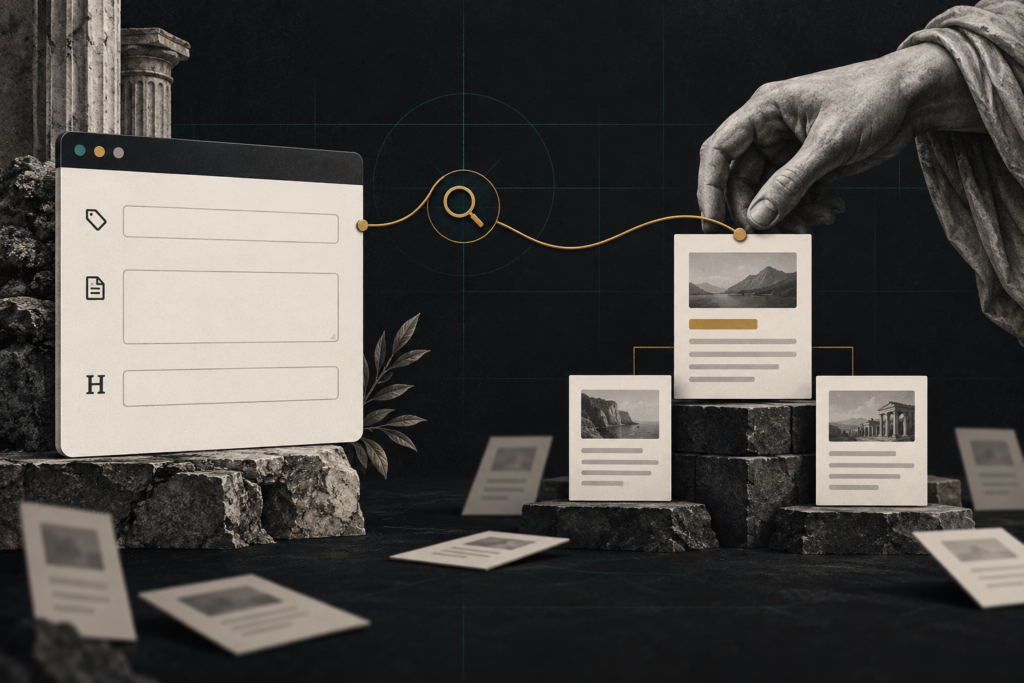
Most serious website builders now provide perfectly usable SEO controls.
The issue isn’t whether you can edit a title tag.
It’s knowing what the title should target in the first place.
A trades business might have enough material to create pages for every service and every town it covers. That doesn’t necessarily mean it should.
Google’s current guidance specifically recommends useful, unique, non-commodity content and warns against creating large numbers of pages simply to cover every possible search variation.
An AI builder can help create the content.
Someone still needs to decide whether the page deserves to exist.
Installing analytics isn’t the same as measuring something useful
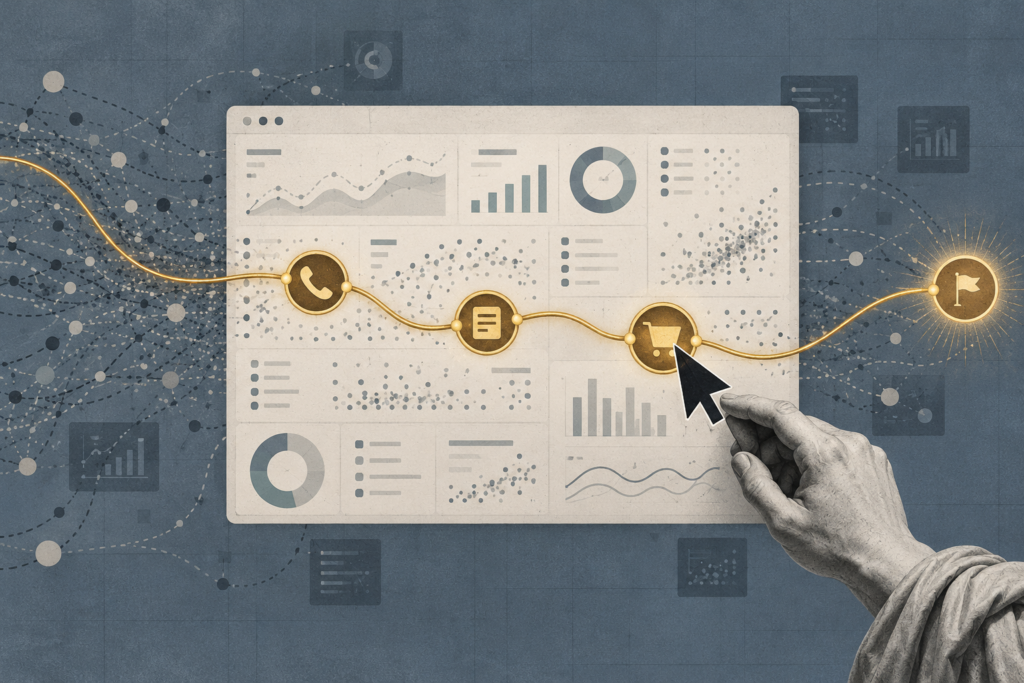
Putting Google Analytics on a website is relatively straightforward.
The more useful question is what you intend to learn from it.
A roofing company probably cares less about page views than completed enquiry forms, phone calls and which services generated them.
An ecommerce business might care about product views, abandoned baskets and completed purchases.
Tracking everything without deciding what matters can create plenty of data without much insight.
The technology handles collection.
You still need to decide which numbers should influence decisions.
Accessibility can’t simply be automated away
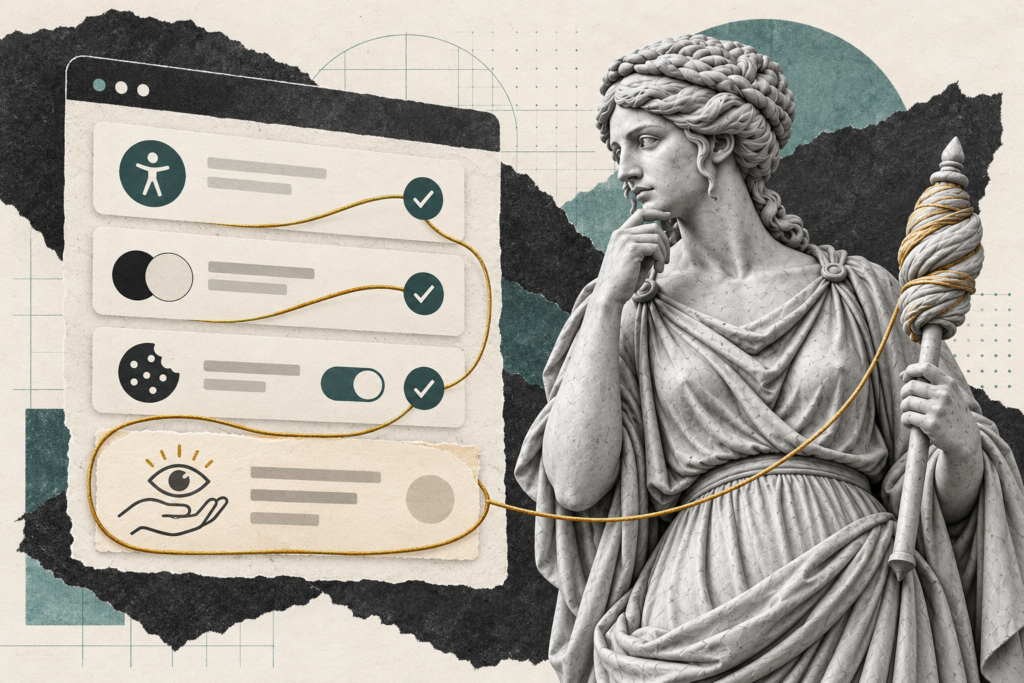
AI should make accessibility easier.
It can help generate alternative text, identify contrast problems and flag missing labels.
But automated checking has limits.
The W3C states that evaluation tools cannot test every accessibility requirement automatically and that knowledgeable human evaluation remains necessary.
That’s important because something can technically exist on the page while still being frustrating or difficult for someone to use.
Automation is useful here.
It just isn’t the same as verification.
The boring legal bits still exist
Generating a website doesn’t remove the rules surrounding how it operates.
Cookies are a straightforward UK example.
The Information Commissioner’s Office says non-essential cookies should not normally be set before a user has provided valid consent through a clear positive action.
An AI builder may provide a cookie banner.
That doesn’t automatically mean everything behind it has been configured correctly.
The same broader principle applies to privacy notices, data collected through forms and any third-party services connected to the site.
You don’t need to become a solicitor before launching a website.
But “the software generated it” isn’t a compliance strategy either.

Think about what happens if you want to leave
This is one of the easiest things to ignore when a platform can create your website in minutes.
Different website builders give you very different levels of portability.
Wix, for example, explains that websites built with its proprietary technology need to remain hosted on Wix’s infrastructure. Your content belongs to you, but the functioning site itself isn’t something you can simply download and place with another host.
Other platforms can provide more export flexibility, but features such as ecommerce, forms, search or CMS functionality may still need rebuilding elsewhere.
That doesn’t automatically make those platforms a bad choice.
Managed systems can remove a lot of hosting, maintenance and security headaches.
The important thing is understanding the trade-off before your business becomes dependent on it.
None of this means you shouldn’t use AI
Quite the opposite.
For many businesses, an AI builder could still be the most sensible way to get online.
The mistake is assuming that because generating the website has become easier, every decision surrounding the website has disappeared with it.
AI can produce pages.
It can suggest copy.
It can recommend layouts and increasingly help with technical tasks that once required specialist knowledge.
What it doesn’t automatically give you is context.
- What is worth ranking for?
- What should you measure?
- What does your customer struggle with?
- Which risks actually matter for your business?
- And which things are simply unnecessary?
Those questions existed before AI website builders arrived.
They’ll still exist after the website has been generated.
The tools are getting much better at building.
Knowing what deserves to be built remains the more interesting problem.